.png)


Fresh vs. dried dates: Which ones should you choose?

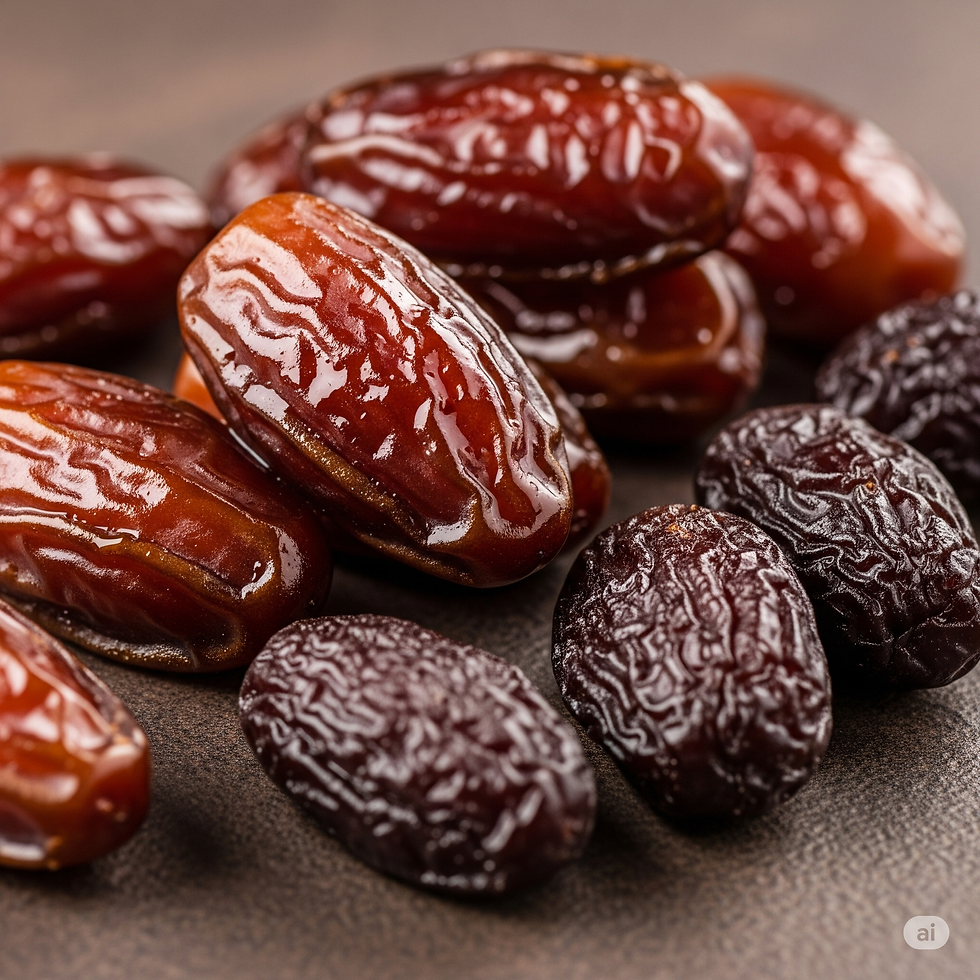
Key Highlights:
Fresh dates are richer in vitamin C and antioxidants, supporting immunity and reducing oxidative stress. Dried dates offer more fiber and phenolic compounds, aiding digestion and providing anti-inflammatory benefits.

Both dates provide essential B vitamins, carotenoids, selenium, calcium, and phosphorus for overall health.
Since ancient times, people have consumed dates that grow in deserts of Southwest Asia and North Africa. They are derived from the date palm tree, which thrives in these arid regions. Dates are now being recognized globally as a nutritious functional food that provides more than just basic nourishment.
Date cultivation
Date palm trees are cultivated in regions of hot deserts with long, and dry summers and little precipitation. The nations that grow the most dates are Saudi Arabia, Egypt, Iran, and Iraq. From unripe green to fully ripe and naturally drying on the tree, the fruit develops in phases. Fresh dates are harvested earlier. Whereas, dried dates are either ripen fully on the tree or sun-dried after harvesting for extended shelf life.
The nutrition from dates
Dates are largely composed of carbohydrates, mainly in the form of easily digestible invert sugars, which are readily absorbed by the body [1]. Dates are also rich in dietary fibers, vitamins, carotenoids, antioxidants, phenolic compounds and selenium.

Dietary fibers
Fresh dates contain about 6.9–8.6 g/100 g of dietary fiber, while dried dates contain slightly more, around 3.6–13.5 g/100 g of fiber, primarily due to the loss of water during drying [2]. The majority of the fiber in dates is insoluble fiber including cellulose, hemicellulose, pectin and lignin, that aids digestion, induces satiety, and supports gut health.
Carotenoids
Carotenoids, like β-carotene and lutein, are crucial for vision and skin health. Carotenoid content varies between yellow- and red-varieties. Red-colored dates typically contain hydrocarbon carotenoids such as lycopene, neurosporene, γ-carotene, and δ-carotene. In contrast, yellow date fruits are rich in α-carotene, β-carotene, and various carotenol fatty acid esters. On average, fresh dates contain approximately 0.913 mg/100 g of carotenoids, while dried dates have a slightly higher content at around 0.973 mg/100 g [2]. Drying degrades some carotenoids; however, certain varieties of dates show a slight increase due to enzymatic changes, making dried dates a moderate source of carotenoids.
Antioxidants
Antioxidants fight free radicals and reduce chronic disease risk. Antioxidant capacity of fresh dates is ~1656 μmol/100 g. Drying significantly reduces the antioxidant levels and activity by ~30–42%, particularly by completely destroying sensitive compounds like anthocyanins. Dried dates demonstrate an antioxidant capacity of ~1025 μmol/100 g [2].
Phenolic compounds
Phenolic compounds exert anti-inflammatory and anti-cancer effects. Fresh dates contain about 150.7 mg/100 g of phenolic compounds, while dried dates contain approximately 353 mg/100 g [2]. Interestingly, phenolic compounds often increase after drying. This could be due to the breakdown of larger compounds such as tannins into bioactive phenols, adding to the total phenolics’ quantities.
Selenium
Dates contain anywhere from 0.24–0.4 mg/100 g of selenium, a trace element that acts as a coenzyme for antioxidant enzyme glutathione peroxidase. Selenium also plays a vital role in regulating defense against infection and modulation of growth and development.
Potassium and Calcium
Dates are rich in essential minerals, providing 345–868 mg/100 g of phosphorus and 52–187 mg/100 g of calcium [1]. These minerals play a key role in the growth and maintenance of cells and tissues, and are especially important for maintaining healthy bones.
Vitamins
Dates are a good source of water-soluble vitamins such as vitamins C and B. On average, fresh dates provide 2.4–3.4 mg/100 g of vitamin C, whereas that amount in dried dates drops to ~1.88 mg/100 g. Dried dates also supply vitamin B including thiamine, riboflavin, niacin, pyridoxal and folate [2].

Drying significantly reduces vitamin C, a heat-sensitive antioxidant. However, B-complex vitamins remain relatively stable, making dried dates a moderate source of B-vitamins, especially B6 and niacin.
Conclusion
Both fresh and dried dates are nutrient-rich and offer unique health benefits. Fresh dates retain more vitamin C and antioxidant capacity, making them ideal for immune support and combating oxidative stress. On the other hand, dried dates are higher in fiber and phenolic content and have a longer shelf life, making them convenient for snacking and storage.
So, which dates should one choose? It depends on the nutritional priorities. For immune support and hydration, fresh dates are excellent. For digestive health and convenience, dried dates preferred. Including both in moderation can help one enjoy both taste and nutrition.
Unlock the full nutritional power of dates with Kraanthi's Homemade Dry Fruit Laddus—crafted with 11 wholesome ingredients, including nutrient-rich dried dates. Don’t wait—shop now and taste the goodness!
References
Ibrahim, A. S., Sukor, R., Anwar, F. et al. (2024). Nutritional, nutraceutical attributes, microbiological and chemical safety of different varieties of dates—A review. Future Foods. Vol. 10, 10042. Available at: https://www.sciencedirect.com/science/article/pii/S2666833524001278
Al-Farsi, Md. A., & Lee, C. Y. (2008). Nutritional and functional properties of dates: Review. Critical reviews in food science and nutrition. Available at: https://www.tandfonline.com/doi/abs/10.1080/10408390701724264


Comments